Is live music becoming a luxury? Inside Belgium's concert ticket economy
AB Talks x KU Leuven, 13 October

What determines the price of a concert ticket? Why are some fans willing to pay hundreds of euros to see their favourite artists? And where should the music industry draw the line between commercial success and accessibility?
These were some of the questions explored during the KU Leuven x AB Talks, an initiative bringing together academics and music industry professionals at Ancienne Belgique in Brussels. From pre-sales and dynamic pricing to rising artist fees, ticket resale regulations and the growing influence of major promoters, the discussion offered different perspectives on the economics of live music.
But beyond the business models and marketing strategies, a more fundamental question emerged: is live music becoming a luxury that only some people can afford? Belgium Music Agenda attended the discussion and takes a closer look at the key arguments, challenges and reflections shaping the future of live music in Belgium.
The rising cost of live music: how inflation is reshaping concerts and festivals
The rising cost of living has affected almost every sector of the economy, and the live music industry is no exception. Behind every concert or festival lies a complex network of expenses that audiences rarely see: electricity, fuel, transportation, equipment rental, security, insurance, technical crews and staff. Since the pandemic and the European energy crisis, many of these costs have increased significantly, forcing organisers to reconsider their budgets and, inevitably, their ticket prices.
For festivals, the challenge is particularly significant. Unlike permanent concert venues, outdoor events often require entire infrastructures to be built from scratch, including stages, sound and lighting systems, temporary electricity supplies, sanitary facilities and camping areas. Transporting equipment, artists and technical teams also involves substantial logistical costs, making festivals particularly exposed to fluctuations in fuel prices. In Belgium, where wages are linked to inflation through automatic indexation, rising living costs can also translate into higher staffing expenses.
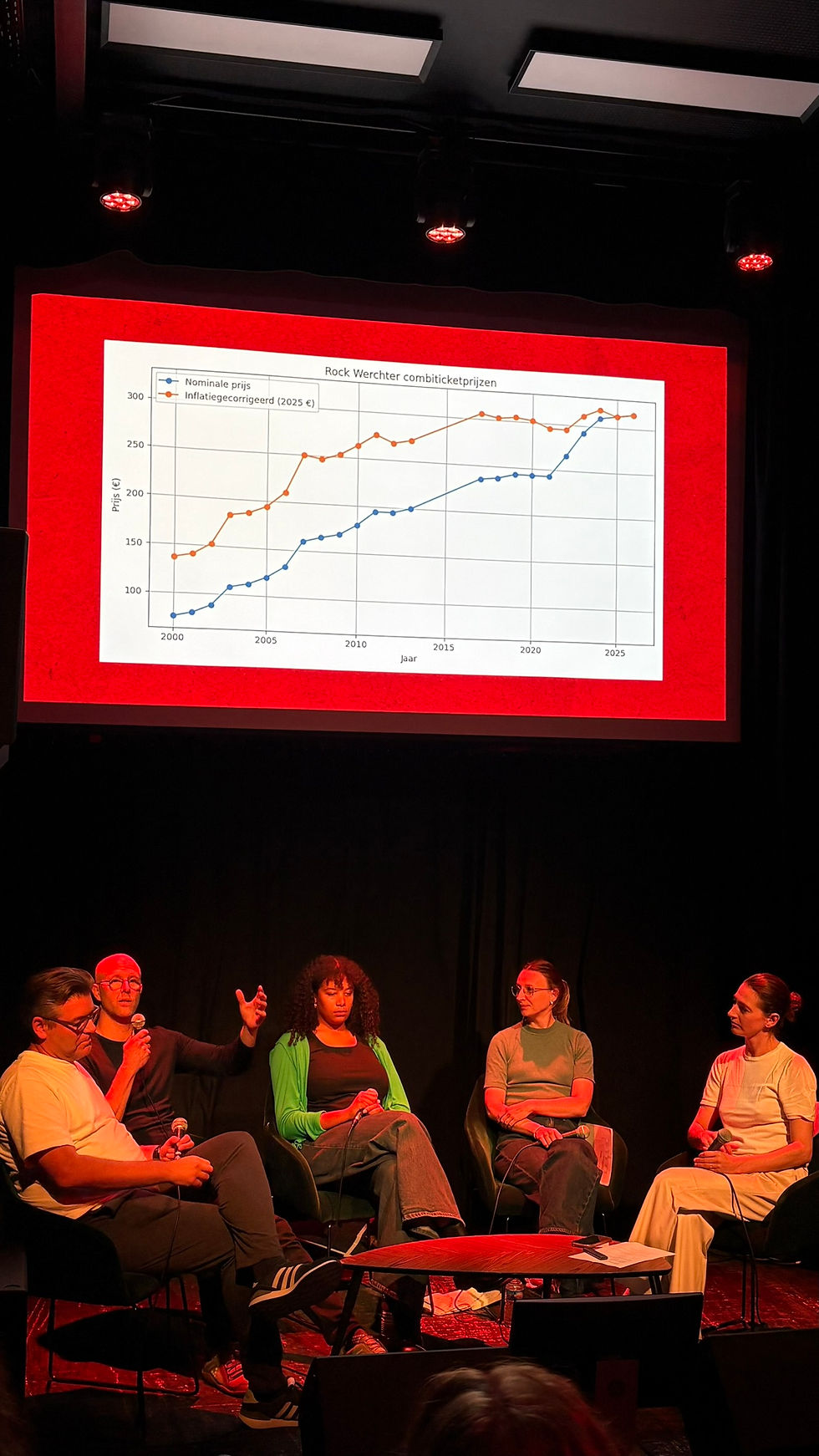
And the figures are revealing. According to an analysis reported by The Brussels Times, the average price of a combined ticket for Belgium's five biggest festivals increased by 67% between 2013 and 2024, while the overall cost of living rose by approximately 32% during the same period. More recently, an analysis of 13 Belgian festivals published by L'Echo in June 2026 found that combined ticket prices had increased by an average of 9.9% compared with 2025, well above the previous year's inflation rate.
The pressure is not limited to Belgium. A study by France's National Music Centre (CNM), covering more than 100 supported music festivals in 2024, found that two-thirds ended their editions with a financial deficit. Technical expenses increased by 6%, artistic costs by 9%, and insurance costs by 14% compared with 2023. Meanwhile, the European Festival Survey 2025 identified rising production costs as the biggest challenge for 29% of established festivals surveyed, illustrating how widespread these financial pressures have become.
Yet higher ticket prices do not necessarily mean higher profits. Organisers must balance growing production expenses against what audiences are willing or able to pay. And for festivalgoers, the ticket itself is only part of the equation. According to a 2026 survey by Belgian consumer organisation Testachats/Test-Achats, festival attendees reported spending an average of around €212 on their experience, including tickets, on-site purchases, transport and accommodation.
This raises a fundamental question for Belgium's live music sector: how much of these rising costs can be passed on to audiences before concerts and festivals become unaffordable? And while inflation explains part of the increase, it does not tell the whole story. Another major factor is reshaping the economics of live music: the growing cost of booking artists.
Bigger artists, bigger fees: are audiences paying more for less?
While inflation and rising production costs have pushed concert prices upwards, another major factor is putting pressure on promoters and festival organisers: the increasing cost of booking artists.
For festivals, securing a major international headliner can represent a substantial financial commitment. Competition between promoters, festivals and concert venues gives established artists considerable negotiating power, particularly when demand is high and tour dates are limited. Bigger names can attract larger audiences, generate media attention and help sell thousands of tickets, but their fees also increase the financial risks for organisers.
This raises another question: does a more expensive artist necessarily deliver a better live experience?
From my perspective, one concerning trend is the apparent reduction in the number of musicians accompanying certain performers on stage. Some artists perform without backing vocalists or even a live band, I saw it many times this year for example with Pussycat Dolls or Josh Levi, relying instead on pre-recorded instrumental tracks and vocals. While this approach can be an intentional artistic choice, it can also reduce touring costs by limiting the number of musicians, technicians and crew members travelling with the artist.
And this is where the experience of the audience comes into question. When fans pay premium prices for a concert, shouldn't they expect a premium live performance? A live band, backing singers and musicians interacting on stage can bring a richness, spontaneity and energy that recorded tracks cannot always reproduce. In our view, replacing these elements with pre-recorded music can sometimes diminish the quality and impact of a show, particularly when ticket prices continue to increase.
Of course, a smaller stage setup does not automatically mean a poorer performance. Electronic music, hip-hop and certain pop productions have long incorporated backing tracks as part of their artistic identity. The distinction lies between using technology creatively and relying on it primarily to reduce costs at the expense of the live experience.
Ultimately, the question is not simply how much an artist costs, but what audiences are actually getting for the price they pay. As artist fees rise and concert tickets become increasingly expensive, the relationship between commercial value, artistic quality and audience expectations deserves closer attention.
A Belgian example: Ostend Beach Festival.
In October 2026, Ostend Beach's CEO and booker Jan Mortelmans publicly questioned the sustainability of rising DJ fees, reporting that some high-demand performers now command €200,000–€300,000 or more. The festival is reconsidering its booking strategy for 2027. These figures are his reported industry observations, not independently verified artist contracts.

Pre-sales: marketing genius or unnecessary frustration?
For many music fans, buying concert tickets has become almost as stressful as attending the concert is exciting. Between artist pre-sales, fan club registrations, newsletter exclusives, credit card partnerships and general sales, securing a ticket increasingly requires planning, constant attention and a little luck. And when the long-awaited general sale finally opens, fans can sometimes discover that very few tickets remain available.
Are pre-sales a clever marketing strategy, or are they making concerts unnecessarily difficult to access? From a commercial perspective, pre-sales offer significant advantages to artists, promoters and ticketing companies. By encouraging fans to register in advance, organisers can collect valuable audience data, measure demand and identify which cities or venues generate the most interest. This information can help artists and their teams adjust their touring strategies, potentially announcing additional dates before tickets even reach the general public.
Pre-sales also create a sense of urgency and exclusivity. Fans are encouraged to register early, follow announcements closely and purchase tickets as soon as they become available, sometimes months before the actual concert. What appears to be a benefit for loyal fans can therefore also function as a powerful marketing tool, helping promoters secure early revenue and build anticipation around an event.
However, the growing number of pre-sales raises questions about fairness and transparency. When a large proportion of tickets is allocated to exclusive sales, what is left for the general public? Fans who are unaware of registration deadlines, unfamiliar with ticketing procedures or simply unable to purchase tickets during a specific time window may find themselves at a disadvantage. The result is a system that increasingly rewards those who are best informed and quickest to react, rather than necessarily those who are most passionate about the music. And this is what here at Belgium Music Agenda have as purpose, keep you informed so you can stay ahead.
During the KU Leuven x AB Talks, Emma Hessels, representativesof concert venue Ancienne Belgique explained that AB limits pre-sale allocations to a maximum of 50% of available tickets, ensuring that at least half remain available for the general sale. This approach strikes an interesting balance between the commercial benefits of pre-sales and the principle of equal access. I strongly support this initiative.
Pre-sales can certainly benefit both organisers and audiences, but they should remain an additional opportunity to buy tickets, not become an almost compulsory step. Reserving a substantial proportion of tickets for the general sale helps ensure that fans who do not participate in exclusive registrations still have a genuine chance to attend. Ultimately, the issue is not whether pre-sales should exist, but how much control they should have over the ticket-buying experience. When access to live music increasingly depends on knowing when, where and how to register, are we rewarding fan loyalty or simply creating another barrier to participation?
Fighting ticket speculation: should Europe follow Belgium's example?
Few things are more frustrating for music fans than discovering that a sold-out concert still has plenty of tickets available — just not at their original price. On secondary ticketing platforms, tickets for highly anticipated shows can reappear at significantly inflated prices, turning fans' enthusiasm into an opportunity for speculation.
Belgium has taken a particularly strong position against this practice. Under the Belgian Law of 30 July 2013 on the resale of admission tickets, the regular commercial resale of event tickets is prohibited, while occasional resale is permitted only when the price does not exceed the original ticket price. In other words, someone who can no longer attend a concert can resell their ticket, but cannot legally profit from doing so.
This legislation aims to protect audiences from ticket speculation, particularly when resellers acquire tickets for popular concerts with the intention of selling them at a substantial profit. It also helps preserve the principle that tickets should primarily serve people who want to attend an event, rather than those seeking to exploit high demand.
At Belgium Music Agenda, I strongly support this approach and believe that similar restrictions should be introduced across Europe, ideally through harmonised European Union legislation. Fans should not have to compete with professional resellers who see concert tickets primarily as financial opportunities. A ticket's value should reflect the experience it provides, not the speculative profit someone can extract from another fan's enthusiasm.
Although the EU has introduced measures against certain unfair ticketing practices, including the use of automated bots to circumvent ticket-purchasing limits, there is still no EU-wide prohibition on reselling tickets above their original price. This creates differences between national markets, while secondary ticketing platforms frequently operate across borders.
Technology can also help prevent fraud and unauthorised resale. One increasingly relevant measure is delaying the release or activation of digital tickets and QR codes until shortly before the concert. This makes it harder for unauthorised sellers to circulate reusable ticket copies or immediately transfer admission codes to buyers. However, delayed delivery alone cannot eliminate fraud: scammers can still advertise tickets they do not possess, and buyers may be asked to pay long before receiving a valid ticket. These measures should also be implemented without unnecessarily restricting legitimate fans. People who cannot attend an event should have access to secure, transparent and affordable resale or ticket-transfer options, ideally through official platforms that respect the original ticket price.
Concert tickets should provide access to music, not become instruments of speculation. Belgium's legislation offers an example of how consumer protection can take priority over the commercial interests of secondary ticket markets. Extending similar protections across the European Union would be an important step towards making the live music experience fairer and more accessible.

TicketSwap vs Viagogo: two different approaches to ticket resale
The difference between ticket resale platforms illustrates why consumer protection remains such an important issue. TicketSwap, a platform widely used by European concertgoers including myself, applies country-specific resale restrictions. In Belgium, sellers cannot make a profit on their tickets. TicketSwap allows a listing price of up to 105% of the original ticket price to account for its 5% seller service fee, meaning the seller can ultimately recover no more than the original amount. Buyers also pay platform transaction and service fees, so the final cost may still exceed the ticket's face value. In countries without equivalent legal restrictions, TicketSwap generally allows resale prices of up to 120% of the applicable reference price.
Viagogo, by contrast, operates a more flexible marketplace in which sellers can generally determine their asking prices, subject to applicable national laws. Its own support documentation acknowledges that tickets may be listed above their original face value. This creates opportunities for substantial markups in markets where such practices are permitted, but also raises concerns when tickets for events in countries with stricter legislation, such as Belgium, appear on international resale platforms.
The issue is far from theoretical. In October 2025, Belgian consumer organisation Testachats/Test-Aankoop, together with Euroconsumers and partner organisations in Spain, Italy and Portugal, filed a complaint against Viagogo under the EU's Digital Services Act. The organisations accused the platform of encouraging consumers to purchase tickets at inflated prices while failing to provide sufficient transparency about sellers. These remain allegations made in the complaint, rather than established findings of wrongdoing. I particulary never use or trust Viagogo and I had bad experiences where twice I bought fake tickets to my surprise when getting to the concert venue.
Ancienne Belgique has also highlighted the risks associated with unauthorised resale platforms. In guidance published by the Belgian Federal Police, an AB representative reported cases involving invalid tickets purchased through Viagogo and warned that tickets on the platform are frequently offered above their original value.
For me, as Director of Belgium Music Agenda, these examples reinforce the importance of protecting audiences from speculative resale. Fans should be able to recover (almost completely) the cost of tickets they can no longer use, but concerts should not become opportunities for third parties to profit from artificial scarcity. Platforms that facilitate secure resale at face value offer a more consumer-friendly model, even if their additional service fees deserve scrutiny.
More importantly, the contrast between TicketSwap and Viagogo demonstrates why stronger, harmonised European rules would be welcome, hello European Commission, where are you?
Social rates: making live music accessible without dividing audiences
As concert and festival prices continue to rise, another important question emerges: should live music be accessible to everyone, regardless of their financial situation? While commercial promoters face increasing production costs and artist fees, several Belgian concert venues are developing initiatives to ensure that affordability does not become an insurmountable barrier to cultural participation.
Brussels' Ancienne Belgique (AB) offers a particularly interesting example. Through its social pricing programme, people experiencing financial difficulties can attend concerts at significantly reduced prices. Holders of an eligible Paspartoe or UiTPAS pay just 20% of the regular ticket price for concerts costing €17 or more, while Article 27 vouchers allow eligible audiences to attend for only €1.25. AB even reserves a limited number of tickets for Article 27 beneficiaries at concerts that would otherwise be sold out. Students can also benefit from reduced ticket prices, encouraging younger audiences to discover live music.
Similar initiatives exist in Antwerp. At De Roma, people entitled to increased social reimbursement can purchase tickets for most performances at just 20% of the standard price. The venue also offers reduced rates for audiences under 26, seniors and residents of certain Antwerp neighbourhoods. Meanwhile, Trix offers a limited allocation of tickets at 20% of their regular price to eligible visitors, alongside discounts for concertgoers under 26. These initiatives demonstrate that accessibility is becoming an important consideration for several Belgian music venues, even if reduced-rate availability and eligibility conditions vary.
However, during the KU Leuven x AB Talks, an interesting dilemma was raised: do different ticket prices risk creating first-class and second-class audiences? Some festivals, including Horst, have experimented with youth-oriented ticket rates, raising questions about whether age-based discounts are always the fairest way to distribute financial support. Not every young person struggles financially, just as not every older concertgoer can comfortably afford a full-price ticket.
At Belgium Music Agenda, I believe that differentiated pricing can be a positive tool for cultural inclusion, provided it is implemented fairly and transparently. Paying a different price should never mean receiving a lesser concert experience, only accepting paying more for a better seat or view and paying less for a ticket at the very back or top of an arena with reduced view. Social rates should remove financial barriers, not create separate categories of spectators or make beneficiaries feel that they are receiving an inferior service.
The real distinction should not be between first-class and second-class audiences, but between a music industry that prioritises maximum revenue and one that also recognises its cultural and social responsibilities. If live music is to remain a shared cultural experience, affordability must be part of the conversation, not an afterthought.


Comments